India Warns Against Terrorists Using Emerging Technologies, Flags Hacking Risks During Conflicts
India calls for greater vigilance against the misuse of emerging technologies by terrorists and warns of hacking threats during conflict situations.
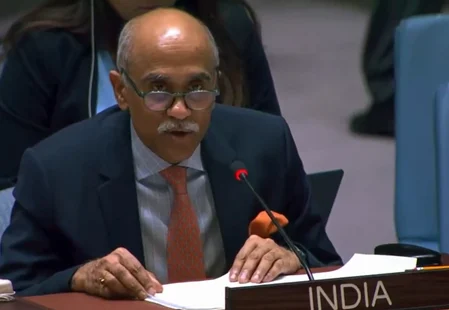
United Nations, Nov 25: India’s AI security warning at the United Nations highlights growing concerns over terrorists and non-State actors exploiting emerging technologies. India has also stressed the need for stronger cybersecurity measures to counter hacking threats during armed conflicts.
India’s Permanent Representative to the UN, P. Harish, said the misuse of advanced technologies by terrorist groups poses a serious concern.
“The potential misuse of these emerging technologies by terrorists and non-State actors is a matter of grave concern,” Harish said on Tuesday (local time).
Speaking during a Security Council debate titled ‘Conflict Resolution in an Era of Rapid Technological Change’, he warned that inaccurate or deliberately manipulated AI-generated data could undermine important decisions.
India AI Security Warning Highlights Cyber Threats
Harish said India has prioritised protecting its digital infrastructure. He pointed to the country’s progress in cybersecurity and emerging technologies.
He noted that India’s Information Technology Act and related rules provide safeguards against unauthorised access, data manipulation and disruption of computer systems. These protections, he said, remain relevant during armed conflicts.
The India AI security warning also comes amid concerns about how rapid technological developments are changing the nature of warfare and the international security environment.
Microsoft Corporate Vice President Frederick Humphries separately highlighted growing risks to digital infrastructure from artificial intelligence.
Referring to Microsoft’s 2026 Digital Defense Report, Humphries said the time available to respond to cyberattacks is shrinking. Newly discovered software or system vulnerabilities can now be turned into functioning attacks in less than 24 hours.
As a result, authorities have less time to verify incidents, communicate intentions and prevent further escalation.
Read More : India Slams Attack on Riyadh Financial District, Confirms Two Nationals Injured
AI Security Risks Require Human Oversight
Harish said artificial intelligence, autonomous systems and other emerging digital technologies offer significant opportunities but also create vulnerabilities throughout the conflict cycle.
He stressed that human judgement must remain central to decisions involving these systems, particularly when weapons are involved.
“Human judgement and oversight remain essential, taking into account the operational context and characteristics of the weapons system,” he said. He added that responsibility for using such systems must always rest with humans.
India AI Security Warning Raises Concerns Over Global AI Divide
The Indian envoy also expressed concern over the widening technology gap between countries. He said export controls and licensing procedures could further disadvantage nations in the Global South.
Harish criticised the tendency to treat developing countries as technology consumers without giving them a meaningful role in deciding how artificial intelligence is developed, regulated and deployed.
UN Secretary-General Antonio Guterres also addressed the issue, describing access to and control over AI as a question of power.
“Fundamentally, this issue is a question of power — who gets to shape, oversee and benefit from AI,” Guterres said.
He noted that many countries, particularly developing nations, have had limited influence over technologies that could shape their future. He warned against allowing an AI divide to create further divisions among nations.
India Calls for Inclusive and Responsible AI Governance
Harish further warned that AI systems could reproduce biases linked to gender, language and socio-economic backgrounds. He said technology must not reduce people to mere data points or raw material.
He also referred to the AI Impact Summit hosted by India in February, which resulted in the New Delhi Declaration endorsed by more than 90 countries.
The declaration called for wider access to AI resources, secure and trustworthy systems, investment in human capabilities and the use of artificial intelligence for economic growth and social good.
Harish said India supports inclusive international cooperation on technology governance through platforms such as the United Nations, while taking national priorities and development needs into account.
Read More : Maharashtra: 43, Including 10 Children, Fall Ill After Eating Chicken Shawarma in Bhiwandi
–IANS