The debate over liquor in Jammu and Kashmir has once again exposed how political parties often speak in different voices when it comes to issues that directly affect society and the younger generation. What should have been a serious discussion about morality, public health, and the future of society has now turned into a political blame game, with every party trying to corner the other while ignoring its own past.
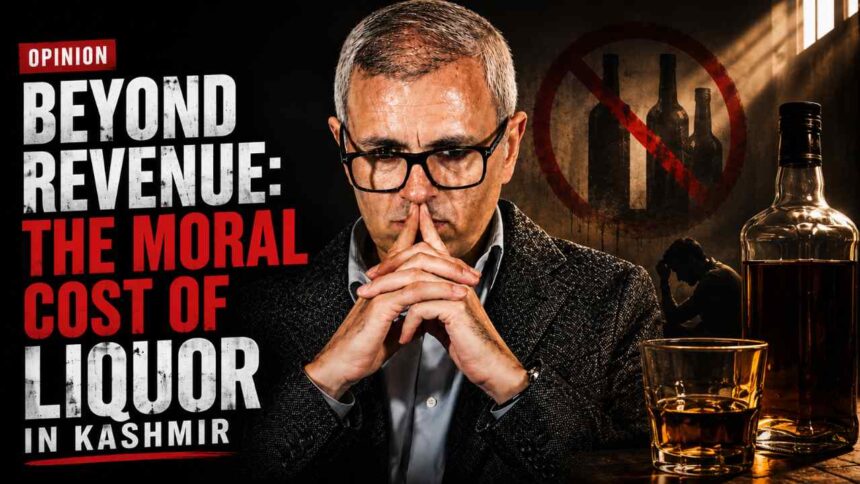
Chief Minister Omar Abdullah recently said that nobody forces anyone to go and buy liquor. On the surface, the statement may sound practical, even logical. But if that argument is accepted, then the same line can also be used when talking about drugs. Nobody forces anyone to buy drugs either. Nobody forces a young boy to inject narcotics into his veins. Nobody forces a student to consume contraband substances. Yet governments across the country are fighting the drug menace because they understand that addiction is not simply a matter of “personal choice.” It is a social disaster.
ALSO READ: Feature | Why Omar Abdullah’s Alcohol Remarks Sparked a Political Storm in J&K
This is where the confusion begins.
Jammu and Kashmir today is already struggling with a dangerous rise in drug addiction. Almost every district has stories of young lives being ruined by narcotics. Families are suffering silently. Parents are watching their children drift away into addiction, crime, depression, and hopelessness. Rehabilitation centres are filling up. Police and security agencies have repeatedly warned about drug trafficking networks operating in the region. In such a situation, reducing the liquor debate to a simple argument that “nobody is forcing anyone” sounds incomplete and disconnected from the ground reality.


The truth is that societies do not function only through laws and markets. They also function through morals, ethics, and collective responsibility. Governments are not merely revenue-collecting institutions. They are custodians of society. They are supposed to protect people, especially the younger generation, from things that slowly destroy lives.
What has made the entire controversy more confusing is the mixed messaging coming from within the ruling Farooq Abdullah-led National Conference itself. Farooq Abdullah has spoken in favour of the financial benefits that come from liquor sales, saying the government earns profit and revenue from it. Omar Abdullah, meanwhile, appears to be softening or recalibrating his position after criticism erupted from various quarters. One leader says one thing while another says something else, and the public is left wondering what exactly the government’s stand is.
ALSO READ: PM Modi’s ‘Amrit Kaal’ Turning ‘Poison for Country’: Rahul Gandhi Slams NEET Paper Leak
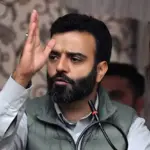
Then came the reactions from opposition parties. The People’s Democratic Party criticised the remarks. The Bharatiya Janata Party also entered the debate. But the reality is that none of these parties can completely distance themselves from responsibility. The BJP shared power with the PDP in Jammu and Kashmir for years. If liquor was considered such a major social evil, why was no serious attempt made then to ban or restrict it? Why did successive governments continue with the same excise policies while speaking about morality only when politically convenient?
That is why this issue cannot be viewed through the narrow lens of politics alone. It concerns every family in Jammu and Kashmir.
Those defending liquor sales repeatedly talk about revenue. They argue that the government earns significant income through taxes and excise duties and that this money helps run public welfare schemes and administration. But revenue is not everything. There are certain matters where ethics and morality should stand above financial calculations.
If tomorrow something harmful generates profit for the government, does profit alone make it acceptable? That cannot be the standard for governance. A society cannot measure every issue only in terms of money earned.
Farooq Abdullah argued that the government receives financial benefit and profit from liquor sales and that this ultimately supports governance. But the larger question remains: should the state depend on earnings that may contribute to social harm, addiction, and the weakening of families? Governments are expected to think beyond balance sheets. They are expected to think about the moral health of society as well.
The damage caused by addiction cannot be calculated only in economic terms. One addicted youth affects an entire family. Parents lose peace. Siblings suffer emotionally. Crimes rise. Mental health deteriorates. Social stability weakens. The long-term cost of addiction is often far greater than the short-term revenue earned through excise duties.
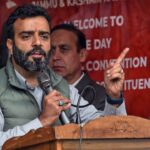
And Jammu and Kashmir is already paying a heavy price because of drugs and narcotics.
Across towns and villages, there is growing fear about the spread of contraband substances among the youth. Teachers speak about students becoming vulnerable. Parents worry constantly about bad company and addiction. Doctors and counsellors repeatedly warn that substance abuse is becoming one of the biggest social crises facing the region. At such a time, the government’s responsibility should be to strengthen awareness, rehabilitation, and moral safeguards instead of appearing indifferent to the broader consequences of addiction-related issues.
ALSO READ: CWC Srinagar Bans Sale of Tobacco, Drugs Near Schools and Religious Institutions
This does not mean the issue is simple. There are legal, economic, and administrative dimensions involved. There are also questions of individual freedom. But leadership is tested precisely in such difficult situations. A government must ask itself not only what is legally permissible, but also what is morally responsible.
The people of Jammu and Kashmir deserve consistency and honesty from their leaders. They deserve a discussion that is sincere, not politically selective. Political parties cannot condemn liquor while in opposition and remain silent while in power. They cannot invoke morality only when it suits them electorally.
The future of the younger generation is too important for that kind of hypocrisy.
Today, Jammu and Kashmir needs a serious and united approach against all forms of addiction — whether drugs, narcotics, or alcohol abuse.
Society must not normalize harmful substances simply because they generate revenue. Revenue losses can be compensated through tourism, investment, industries, and better economic planning. But once a generation falls into addiction, no amount of money can fully repair the damage.
In the end, governments are remembered not only for how much money they earned, but for the values they protected. And when morals, ethics, and the wellbeing of society are at stake, those values must come before political convenience and revenue calculations.