Bandipora, Apr 22: I had to rest my case and let my pen rust for a long time before I realised that enough is enough, and one must break the silence. More importantly, I have always believed that writing is an act of social service. Writing must be an act of resistance, and in a democratic society, the written and spoken word form the fourth pillar.
The strength of a democracy lies in the robustness of its institutions. Writing itself is an institution, like every other form of expression, and the health of a society is reflected in the quality of its writing and scholarship. For a writer, writing is activism of the highest order. If it does not serve this purpose, it loses meaning. Journalism, too, must speak truth to power and hold those responsible for public policy and spending accountable. If it fails to do so, it loses its influence.
ALSO READ: Man dies after recieving electric shock in Baramulla
Another reason that compelled me to bury my pen under a pile of forgotten things was the painful realisation that the great tradition of reading is fading away. We live in an age of distractions, where it is increasingly difficult to focus on one thing. Yet focus is the key to reading. There is a growing unease around us—nobody reads anymore. People say they have no time to read. Sometimes, I, too, have asked myself: who cares?
And that is precisely what happens when we stop reading—we stop caring. We may continue to breathe, eat, and drink, but that does not mean we are truly alive. To live fully means to care. Care is the first step toward love, and love is the highest way of achieving our collective goals. Therefore, while writing may sound harsh at times, its ultimate purpose must be to create a sense of love, belonging, and justice.


Another consequence of the decline of reading is the death of criticism. Criticism is essential to a successful democracy. It is the creative and analytical act of examining things through the lens of truth, objectivity, and beauty. As T.S. Eliot said, “Honest criticism is directed at poetry, not at the poet.”
This means a writer must also remain a critic. Once the critic within dies, the writer loses the sharpness of the pen and the power of the word. I do not mean criticism rooted in malice, but criticism that seeks improvement. Writing is not sycophancy. It should never compromise when it comes to serving the people. Those who inherit the pen and public voice must never become slaves to flattery.
Let me now come to the central point of this article: Bandipora. My hometown is proverbially known for its three A’s—Alim, Adab, and Aab. Yet my concern today is not with any of these things that we proudly boast about. My concern is with the collective loss of our voice.


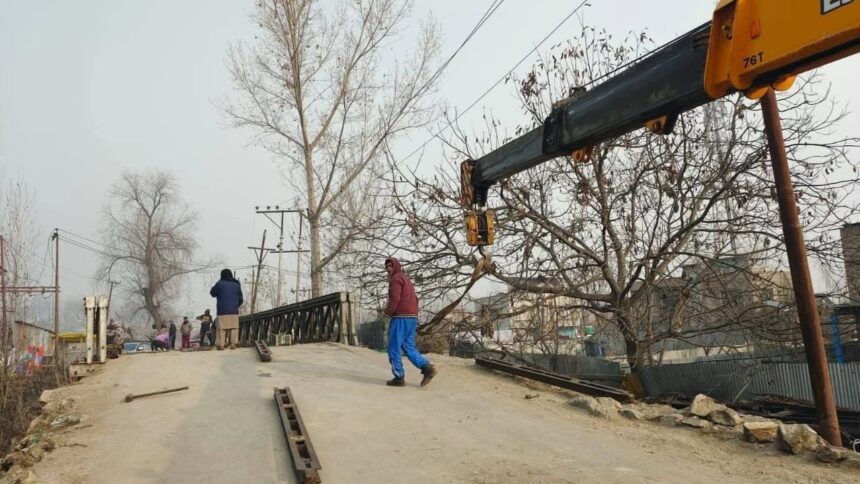
To me, Bandipora has become a district of broken roads, broken bridges, and broken promises—a symbol of disjointed connectivity. Of all the districts in Kashmir, it appears among the most neglected, underrepresented, and forgotten in political memory.
If you are visiting this place for the first time, you are not travelling to a district but to a test of patience. If you are driving, your heart remains in your mouth. The journey demands not just patience but complete control over your senses and limbs, as vehicles are diverted into narrow strips and congested passages.
If you are a patient in need of urgent medical care, may God help you. No ambulance should have to ferry someone through such roads. A journey here is not merely travel—it is a trial of endurance.
Bandipora still retains traces of natural beauty despite the gradual destruction of its environment, as seen elsewhere. There remains enough beauty to stir the imagination. Yet one thing outlasts all else: the misery of travel and the pain of trying to reach somewhere on time amid broken connectivity.
From Srinagar to Bandipora, the distance is barely sixty kilometres. But these sixty kilometres break your back. They broke mine when I was a college student. We would travel through the Nowgam route, squeezed into buses packed like crates of apples. It would take nearly three hours to reach Srinagar.
Twenty-five years later, in an age of speed and rapid development, little has changed on the ground. Bandipora may have become a district on paper, but for the common man, life remains stuck on broken roads, weak bridges, damaged culverts, and endless diversions.

In a country building highways through mountains and engineering wonders across rivers, Bandipora still struggles with basic connectivity. Residents of places like Aragam remain virtually cut off because the crucial bridge connecting them to the district headquarters has remained pending for years. Those travelling from Hajin to Bandipora often risk their lives on dangerous roads where one mistake could send a vehicle into the waters of the Jhelum.
Even today, it takes nearly three hours to reach Srinagar and return. The key junction near Naninara Sumbal remains under construction for what feels like an eternity. Meanwhile, flyovers elsewhere rise rapidly like giant Chinar trees.
Why is there no urgency here? Is it because those affected are the invisible poor? Is it because they are not part of grand development dreams? Or because the people have normalised suffering?
The road is full of frustration—impatient drivers, exhausted passengers, tempers rising, abuses exchanged. Yet there seems to be no urgency in addressing this daily misery.
Bandipora has three elected representatives, and I am sure they are aware of the suffering of their people. The district administration, too, must be trying within its means. But awareness alone is not enough. Action is what matters.
The common man is central to democracy, yet today he has become a laughing stock. Some say the district is invisible. But visibility is the duty of public representatives. Bringing Bandipora onto the development map is a collective responsibility.
For that, we must break the silence and relearn the art of speaking and writing truth without fear, flattery, or unnecessary praise of those in power. The language of truth can be polite, but it is often bitter—and sometimes it must be bold.
I end with a memory. During a college function, a Deputy Commissioner was asked what impressed him most about Bandipora. His reply was sincere, but deeply unsettling: “It is a great place to rest and sleep.”
ALSO READ: At least 34 Iran-linked tankers managed to bypass US blockade: Report
Author: Naseer Khan, a teacher in the Department of Higher Education, Jammu and Kashmir.
Disclaimer: The views expressed in this article are solely those of the author and do not necessarily reflect the editorial stance of Asian News Hub.