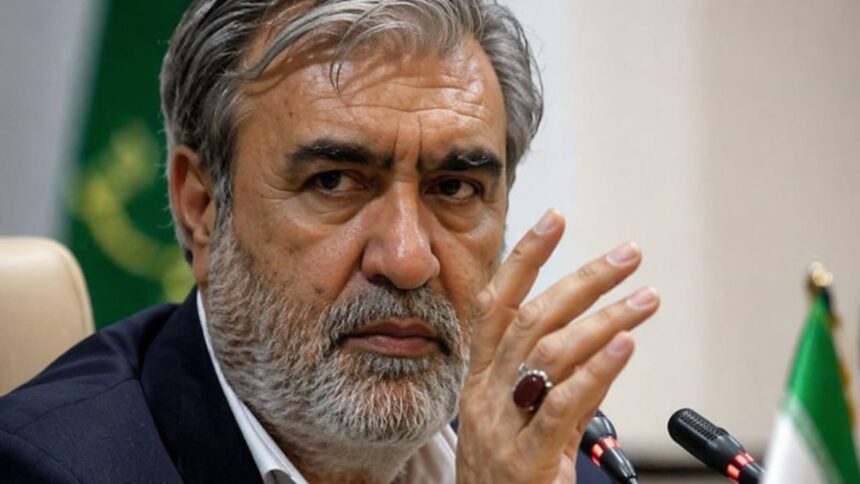
Tehran, May 17: Ebrahim Azizi, head of Iran’s parliamentary National Security Committee, said Saturday that Iran has developed a “professional mechanism” to regulate Strait of Hormuz maritime traffic via a designated route, to be unveiled soon.
ALSO READ: Two Killed, Three Injured in Pahalgam Road Accident
In a post on X, Azizi said the proposed mechanism has been developed within the framework of Iran’s national sovereignty and with the aim of ensuring the security of international trade. He further stated that only commercial vessels and parties cooperating with Iran would be permitted to benefit from the mechanism.
Azizi also said that the proposed route would remain closed to operators associated with the so-called “freedom project” (United States).
“Iran, within the framework of its national sovereignty and the guarantee of international trade security, has prepared a professional mechanism to manage traffic in the Strait of Hormuz along a designated route, which will be unveiled soon. In this process, only commercial vessels and parties cooperating with Iran will benefit from it. The necessary fees will be collected for the specialised services provided under this mechanism. This route will remain closed to the operators of the so-called ‘freedom project,” said the ‘X’ post from Azizi.


This development comes amidst the ongoing tensions within the Middle East region due to the US-Iran conflict.
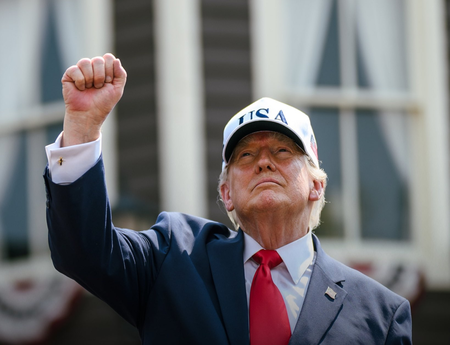
Earlier on Friday, US President Donald Trump had said that the United States and China have agreed that “Iran can’t have nuclear weapons,” and that the Strait of Hormuz must be opened.
Speaking to reporters aboard Air Force One following his departure from China, President Trump asserted that the US controls the Strait of Hormuz, while emphasising Iran has been hit with 500 million dollars of loss per day in the past two and a half weeks due to the US’s naval blockade in the region.



“I have a lot of respect for him. On Iran, he feels strongly that they can’t have a nuclear weapon–said that very strongly, they can’t have a nuclear weapon–and he wants them to open up the strait. But as he said, they close it, and you close them. And it’s true, we (US) control the strait, and they (Iran) have done no business in the last two and a half weeks, which is approximately 500 million dollars a day,” said President Trump.
US President Donald Trump had warned of “very bad times” if any peace deal to end the West Asia crisis is not reached, Al Jazeera reported, while quoting local French broadcaster BFMTV.
Meanwhile, Iranian Foreign Minister Abbas Araghchi asserted that the United States remains the primary barrier to peace in West Asia. Araghchi claimed that after more than a month of failed military objectives, the US attempted to pivot toward dialogue, a move met with deep-seated scepticism in Tehran.
Addressing a press conference in New Delhi following a meeting of the BRICS Foreign Ministers, the Iranian Foreign Minister laid bare the trust deficit defining the current geopolitical standoff.
He said, “Now, after 40 days of war, when the US became hopeless of achieving any goal in their aggression against Iran, they offered negotiation… We have no trust in Americans… This is the main obstacle in the way of any diplomatic effort.


We have every reason not to trust Americans, while they have no reason not to trust us.”(ANI)