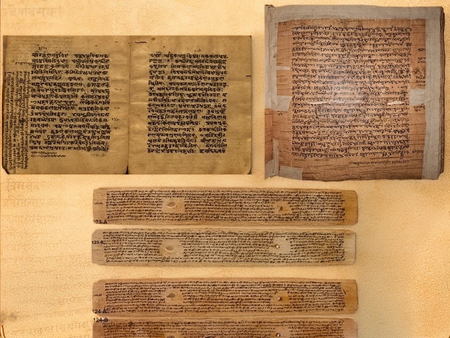
Srinagar, Nov 6: Rajatarangini UNESCO recognition has brought international attention to Kashmir’s centuries-old literary and historical heritage. The historic chronicle, written by Kashmiri historian Kalhana between 1148 and 1149, has entered UNESCO’s Memory of the World Asia-Pacific Regional Register.
The inclusion marks an important recognition of Kashmir’s intellectual and historical traditions. The Mahabharata and Arthashastra have also joined the regional register.
J&K Lieutenant Governor Welcomes Rajatarangini UNESCO Recognition
The office of Jammu and Kashmir Lieutenant Governor announced the development through a post on X.
“Proud moment for Jammu Kashmir & the nation! Kalhaṇa’s Rajatarangini, Mahabharata & Arthasastra have been inscribed in @UNESCO’s Memory of the World Asia-Pacific Regional Register,” the L-G’s office said.
It added that Rajatarangini’s inclusion celebrates Kashmir’s rich intellectual heritage. Furthermore, the office said the recognition highlights the lasting value of India’s civilisational traditions and their contribution to humanity.


The statement also stressed the importance of preserving this knowledge for future generations.
Ministry of External Affairs spokesperson Randhir Jaiswal also welcomed the recognition. In a post on X, he said India’s timeless wisdom had earned global recognition.
“The Rājataraṅgiṇī of Kalhaṇa, the Mahābhārata and the Arthaśāstra of Kauṭilya have been inscribed on @UNESCO’s Memory of the World Committee for Asia and the Pacific (MOWCAP) Regional Register,” he wrote.


Jaiswal added that the recognition marked a proud moment for India’s knowledge traditions, which continue to resonate across generations and borders.
Read More : J&K Police Arrest Two More in Separatist Terror Module-Linked Case
Rajatarangini: Kalhana’s Historic Chronicle of Kashmir
Rajatarangini is a Sanskrit metrical chronicle that combines legendary accounts with historical narratives. It documents the history of the north-western Indian subcontinent, with particular focus on the kings of Kashmir.
Kalhana, a Kashmiri Brahman scholar, composed the work in the 12th century. The chronicle covers Kashmir’s past from its earliest traditions up to the period of its composition.
His family connections gave him access to information about court affairs. Both his father and uncle had served in the Kashmir court. As a result, Kalhana had access to details of contemporary political developments and royal intrigues.
Sources Behind Kalhana’s Rajatarangini
Kalhana drew upon several earlier literary works and historical accounts while preparing his chronicle. These included the Harshacharita and Brihat Samhita, along with local royal narratives known as rajakathas.



He also consulted earlier works on Kashmir, including Nripavali by Kshemendra, Parthivavali by Helaraja and Nilamatapurana.
Beyond literary sources, Kalhana examined a wide range of historical material. These included royal inscriptions, records of temple construction, land grants, coins, monuments, family records and local traditions.
His use of different sources reflected considerable attention to historical evidence for his time.
However, the chronicle also carries the limitations of its period. Kalhana relied on traditional assumptions and moral interpretations in parts of his narrative. These influences become particularly noticeable in his accounts of Kashmir’s early history.
The UNESCO recognition therefore brings renewed attention to a work that remains an important source for understanding Kashmir’s historical and literary traditions.
Read More : Men’s Cricket World Cup Qualifier Playoffs to Begin in Nepal on December 4
–IANS