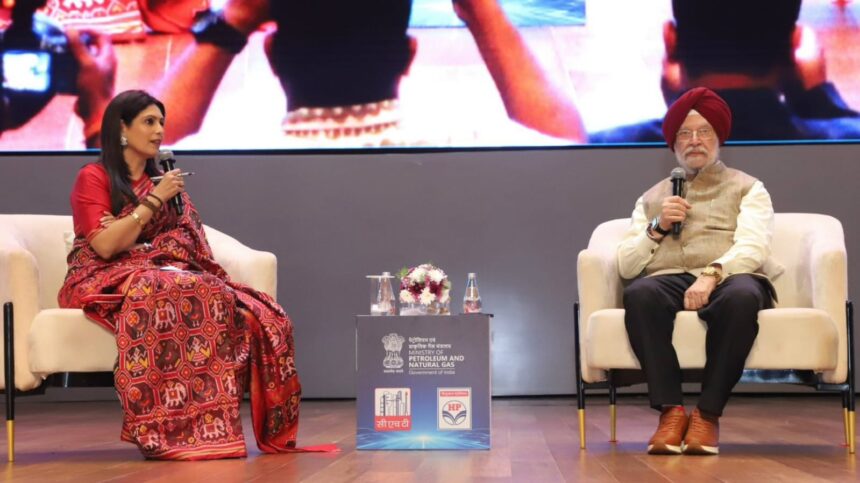
Betul (South Goa), October 27 (IANS): Ethanol blending in petrol will remain at the current level of 20 per cent, with no immediate plans to increase it further, Union Minister for Petroleum and Natural Gas Hardeep Singh Puri said on Tuesday. The statement clarifies the Centre’s current position on increasing the ethanol blend beyond the existing level.
During an interaction at the inauguration of the 29th Energy Technology and Innovation Meet in South Goa, Puri also claimed that misinformation was being spread about biofuels.
The minister’s remarks come amid discussions surrounding the use of ethanol-blended petrol in India and concerns raised by some vehicle users about its compatibility and performance. The government has continued to promote ethanol as an alternative fuel component as part of its broader energy strategy.
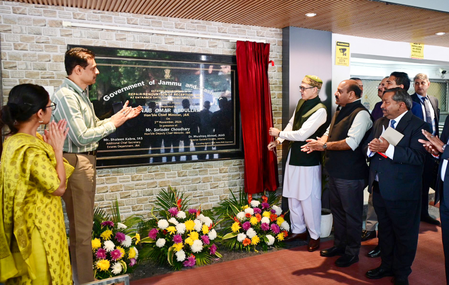
Read More: LG Manoj Sinha Swears In Four Ministers in Omar Abdullah-Led J&K Government
Centre Has No Immediate Plan to Increase Ethanol Blending In Petrol
“In so far as biofuels are concerned, yes, the 20 per cent ethanol blending was the target, and there is no desire, just now, to increase it by more than 20 per cent,” he said in reply to a question.


He also said that misinformation was being deliberately spread about E20 (20 per cent ethanol-blended petrol).
The government has been promoting ethanol-blended petrol as part of its strategy to reduce dependence on imported crude oil, which is the leading factor behind the country’s current account deficit. The country has already rolled out E20 fuel, containing 20 per cent ethanol and 80 per cent petrol.
Ethanol blending forms part of India’s efforts to diversify its fuel mix and encourage the use of domestically produced renewable fuel components. The existing E20 rollout represents the government’s current blending target, while Puri’s remarks indicate that no further increase is planned immediately.


Hardeep Puri Responds to E20 Fuel Concerns
Puri said he saw a social media post which claimed that vehicles had stopped and were facing breakdowns, implying that the government stopped selling the blended fuel.
He said that E20 blended fuel was compatible with the vehicles. “There was some problem with the older vehicles which were manufactured before 2003,” the minister pointed out.
The minister’s comments addressed concerns about how vehicles respond to petrol containing a higher proportion of ethanol. Vehicle compatibility has been a key issue in discussions around the transition to E20 fuel, particularly in relation to older vehicles and reports circulating on social media.
Read More: Breast Cancer in Kashmir: Experts Stress Early Diagnosis
He said the introduction of E20 petrol helped the country save Rs 1,60,000 crore, of which Rs 1,40,000 crore was given back to farmers.
“The farmers have become Urjadata (giver of energy) from Annadata (giver of food),” he remarked.


Asked about problems reported by the E20 fuel users, Puri said, “I think there was a problem with the transportation of the blended fuel. The tankers which were used for transportation were also used for other things.”
“As far as the engine damage story is concerned, someone had made the claim and the particular automobile manufacturer has filed a case against him,” he pointed out.
The minister said the misinformation about the E20 (fuel) was a “contrived narrative”.
“Six crore vehicles go to the dispensing stations every day. If engine damage was caused, you could have seen the vehicles all over the place,” he added.
Flex-Fuel Vehicles and Higher Ethanol Blends
The Road Transport Ministry on Monday notified changes to the Central Motor Vehicles Rules 1989, allowing flex-fuel vehicles that can run on up to E100 (near 100 per cent ethanol).
Flex-fuel vehicles are designed to run on higher ethanol blends such as E85 (85 per cent ethanol, 15 per cent petrol) and E100 (near 100 per cent ethanol). Leading auto manufacturers such as Toyota, Tata Motors, and Hyundai Motor Company are also developing flex-fuel vehicles for the Indian market.
These vehicles are designed to accommodate different ethanol concentrations, offering manufacturers and policymakers additional options as alternative fuels are developed. Their introduction also highlights the growing focus on fuel technology and the development of vehicles suited to different fuel blends.
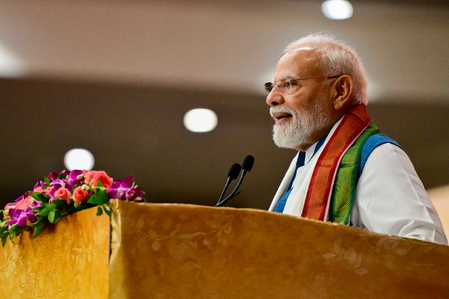
The minister was speaking at the inauguration of the meeting with the theme: ‘Accelerating Energy Innovation From Research to Commercialisation’ organised by the Ministry of Petroleum and Natural Gas at South Goa’s Betul village.
— IANS