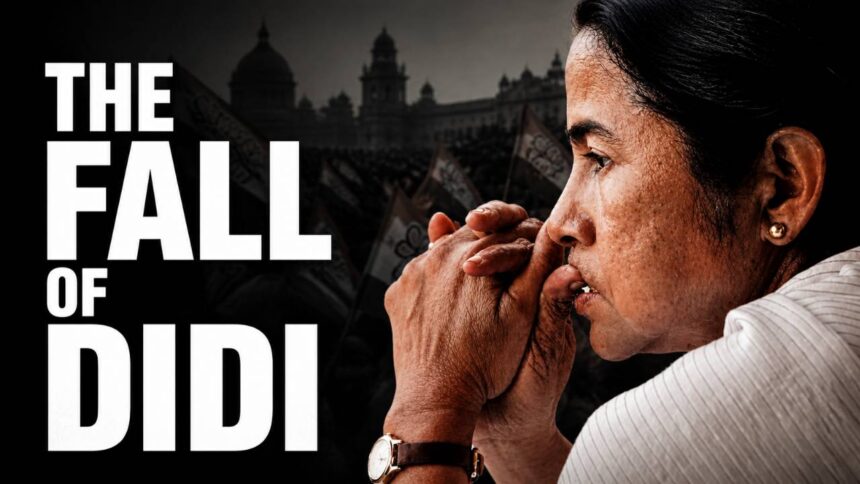
There are elections that change governments, and then there are elections that change the mood of a people. What has unfolded in West Bengal feels like the latter. The defeat of Mamata Banerjee is not just a political upset; it carries the weight of something deeper, almost like a quiet but firm decision by voters that it was time to turn the page.
For years, Mamata Banerjee wasn’t just a Chief Minister; she was the political heartbeat of Bengal. Her rise had come from the streets, her appeal rooted in defiance, and her hold over the state seemed, at times, unshakeable. Which is why this verdict feels so striking. It is not simply that she lost—it is how decisively the ground slipped beneath her.
ALSO READ: Opinion | Decline of Moral Ethics in Global Politics
The numbers tell their own story, and they are hard to ignore. Now that the results have been declared by the Election Commission of India, the Bharatiya Janata Party has won with almost 207 seats in the 294-member Assembly, while the All India Trinamool Congress has been pushed down to around 80. In political terms, this is not just a defeat; it is a collapse of dominance that few would have predicted not too long ago.
It is tempting to explain this result through high politics, alliances, strategies, personalities. And yes, those factors mattered. There was visible anti-incumbency, a sense that even “safe seats” were no longer safe. Leaders like Suvendu Adhikari managed to tap into local networks and discontent in ways that hurt the ruling party more than expected. The BJP’s campaign, too, stayed sharply focused, repeatedly hammering home the idea of “Parivartan” change while pointing to allegations of corruption and excesses at the grassroots level.


But if you listen closely to what people were saying—not on television debates, but in tea shops, buses, and homes—the reasons feel far more basic, almost painfully so, the main being joblessness.
Across Bengal, especially among the youth, there has been a growing sense of being stuck. Degrees in hand, but no opportunities to match them. Hopes that were once tied to change began to fade into frustration. And over time, that frustration stopped being private. It turned into something collective, something political.
ALSO READ: Drug Peddlers ‘Enemies of Nation’, Will Face Stern Action: LG Manoj Sinha



This wasn’t just about unemployment as a statistic. It was about what joblessness does to everyday life, the uncertainty it creates in families, the quiet anxiety it brings into homes, the feeling that the future is moving elsewhere while you remain where you are. That kind of sentiment doesn’t explode overnight. It builds, slowly, until one day it finds expression.And when it did, it cut through everything else—loyalty, identity, even emotion.
The other major reason being corruption. Observers say the corruption is widespread in Bengal, and she did little to curb the menace.Bengal has always been an emotional political space. Leaders here are not just elected; they are embraced. Mamata Banerjee, “Didi” to millions, had built that connection over years of struggle and symbolism. But this election suggests something has shifted. That emotional bond, while still real, is no longer unconditional.
Voters seem to be asking a different question now: not just who are you, but what have you delivered?That shift matters far beyond Bengal. If a leader as deeply rooted as Mamata Banerjee can face such a reversal, it raises uncomfortable questions for regional parties across India.
For decades, they have thrived on identity, language, and local pride. Those factors are not going away, but they may no longer be enough on their own.
There is also a larger national ripple. The INDIA bloc has, in one stroke, lost one of its strongest pillars. Mamata was not just another regional player; she was a voice, a force, and often the sharpest counter to the ruling establishment. Her absence leaves a gap that will not be easy to fill.
ALSO READ: PM Modi Crushed Terrorism With Iron Fist, Says Amit Shah; Cites Article 370, Surgical Strikes



Still, it would be too simple to say this is the end of regional politics. India is too diverse, too layered for that. But what this verdict does suggest is a change in expectations. Voters are less patient, more demanding, and far more willing to punish when they feel let down.In that sense, Mamata Banerjee’s defeat is not just her story.
It is a signal.
A reminder that in today’s India, no political legacy, no matter how strong, is immune to the everyday realities of people’s lives.